There is something deeply rewarding about growing your own food.
Whether it's slicing into a sun-ripened tomato you grew yourself, harvesting crisp lettuce for a fresh salad, or watching your children pull their first carrot from the ground, gardening creates a connection between people, food, and the land that few other hobbies can match.
For many families, a backyard garden becomes much more than a place to grow vegetables. It becomes a classroom where children learn patience, responsibility, and an appreciation for nature. It becomes a place to unwind after a long day, spend time outdoors, and enjoy the satisfaction of harvesting something you've nurtured from seed to table.
If you've ever dreamed of starting a garden but didn't know where to begin, you're not alone. One of the most common questions we hear at AZ Soil Solutions is, “How do I build a garden that actually grows healthy vegetables?”
The answer surprises many people.
It isn't the seeds, the fertilizer, or even how often you water; it all begins with the soil.
Healthy soil is the foundation of every successful garden. When the soil is rich in organic matter, balanced in minerals, alive with beneficial microorganisms, and able to hold both water and nutrients, plants have everything they need to develop strong roots and produce abundant harvests.
That's why we always encourage gardeners to build the soil before they plant the garden. A little extra effort at the beginning can reward you with healthier plants, fewer problems, and more productive harvests for years to come.
Why Raised Garden Beds?
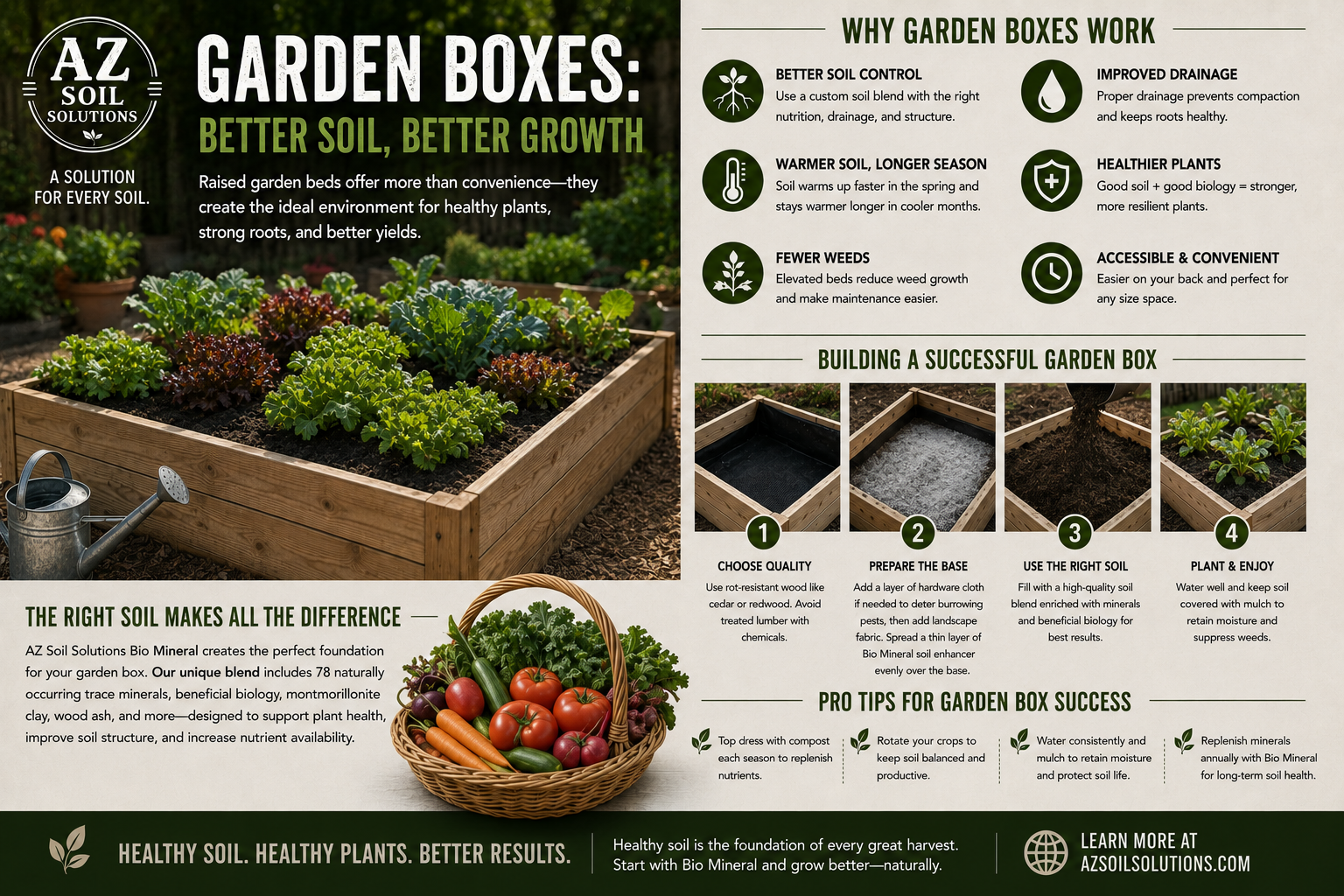
Raised garden beds have become increasingly popular, and for good reason. Unlike planting directly into native soil, raised beds allow you to create the ideal growing environment from the very beginning. You have complete control over the quality of your soil, making it easier to provide the right balance of nutrients, organic matter, drainage, and moisture retention. For Arizona gardeners, raised beds offer several additional benefits. They warm up earlier in the spring, drain more efficiently during monsoon storms, reduce soil compaction from foot traffic, and make gardening more comfortable by bringing the growing area closer to waist level. They also make it easier to manage weeds and improve irrigation efficiency, two important advantages in our desert climate. Whether you build your raised bed from cedar, redwood, galvanized steel, or another durable material, the goal is the same: create a healthy home where your plants can thrive.
Choosing the Perfect Location
Before you pick up a shovel or purchase lumber, take a few minutes to choose the right location. Most vegetables require at least 6–8 hours of direct sunlight each day, so watch how the sun moves across your yard and choose a spot that receives plenty of morning and afternoon light. You'll also want your garden close to a water source, because the easier it is to water your plants, the more likely you'll be to maintain a healthy watering schedule throughout the growing season. Good air circulation is another important factor, as proper airflow helps reduce excess humidity around plants and can minimize certain plant diseases. Finally, think about convenience. A garden that's close to your home is more likely to receive regular attention, helping you notice problems sooner, harvest vegetables more often, and simply enjoy spending time in it.
Building Your First Raised Bed
One of the biggest misconceptions about raised beds is that they have to be large or expensive. In reality, a simple 4-foot by 8-foot bed is the perfect size for most beginners. It's large enough to grow a surprising amount of vegetables while still allowing you to reach the center from either side without stepping into the soil. A depth of 12 to 18 inches provides plenty of room for most vegetable roots while allowing excellent drainage. Choose durable materials designed to withstand years of outdoor exposure. Cedar and redwood are naturally resistant to decay, while galvanized steel beds have become increasingly popular because of their longevity and modern appearance. Remember, the frame simply holds the soil. The real investment is what goes inside.
Building Healthy Soil From the Ground Up
Many first-time gardeners spend hours choosing plants but only a few minutes thinking about the soil. In reality, healthy vegetables begin long before the first seed is planted. A productive raised bed should contain a blend of quality garden soil, compost, and organic matter that creates a loose, well-drained growing environment. This mixture allows roots to expand easily while providing excellent moisture retention and airflow. At AZ Soil Solutions, we encourage gardeners to think beyond simply feeding their plants. Healthy gardens are built by creating healthy soil first. When preparing a new raised bed, thoroughly mix your soil blend before planting. This is also the ideal time to incorporate AZ Soil Solutions Bio Mineral throughout the root zone. By evenly distributing the amendment before planting, you help introduce a diverse range of naturally occurring trace minerals where developing roots can benefit from them as the garden grows. Rather than waiting until plants begin showing signs of stress, building the soil from the beginning creates a stronger foundation for the entire growing season.
What Should You Grow in Arizona?
One of the greatest advantages of gardening in Arizona is that, with proper planning, you can enjoy fresh produce during much of the year. While our summers can be intense, our mild winters create opportunities that gardeners in colder climates simply don't have. If you're building your very first raised bed, start with vegetables that are productive, forgiving, and enjoyable to harvest. Some of the easiest crops for beginners include:
- 🍅 Tomatoes
- 🌶️ Peppers
- 🥒 Cucumbers
- 🥬 Lettuce
- 🥕 Carrots
- 🧅 Onions
- 🌿 Basil
- 🌱 Cilantro
- 🌱 Parsley
- 🌱 Bush Beans
Each of these crops performs well in raised beds when given healthy soil, consistent watering, and plenty of sunlight. Don't feel like you have to plant everything at once. Start small, learn what grows well in your yard, discover what your family enjoys eating, and allow your garden to grow a little more each season. Gardening isn't about perfection, it's about progress.
Water Is Just as Important as Soil
In Arizona, water is one of our most valuable resources. While healthy soil is the foundation of every successful garden, proper watering is what keeps that foundation working. One of the most common mistakes new gardeners make is watering too often but not deeply enough. Frequent, shallow watering encourages roots to remain near the surface, where they become more vulnerable to heat stress and drying out. Instead, water deeply and less frequently. Deep watering encourages roots to grow farther into the soil, creating stronger, healthier plants that are better able to tolerate Arizona's hot summers. Healthy soil also plays an important role in water conservation. Soil rich in organic matter and balanced minerals acts like a sponge, helping retain moisture around the root zone while still allowing excess water to drain away. This not only benefits your plants but also helps reduce water waste, something every Arizona gardener can appreciate.
Mulch: One of the Best Investments You Can Make
If there's one gardening practice that's often overlooked, it's mulching. A simple layer of straw, shredded bark, wood chips, or compost spread across the surface of your garden can dramatically improve growing conditions.
Mulch helps:
- Reduce evaporation
- Moderate soil temperature
- Suppress weeds
- Reduce soil erosion
- Protect beneficial microorganisms
- Add organic matter as it breaks down
In Arizona's desert climate, mulch becomes even more valuable by helping the soil stay cooler during extreme summer temperatures. Nature rarely leaves soil exposed, and as gardeners, we shouldn't either.
Five Common Mistakes New Gardeners Make
Every gardener makes mistakes, and the good news is that every mistake is also an opportunity to learn. Here are five of the most common:
1. Planting Too Much
It's tempting to fill every inch of your raised bed during your first season, but plants need enough room to grow. Proper spacing improves airflow, reduces disease pressure, and allows roots to fully develop.
2. Ignoring the Soil
Many people spend hundreds of dollars on plants but very little on the soil they're planted in. Remember, healthy soil is what supports healthy plants, and investing in the soil is investing in every future harvest.
3. Watering by the Clock
Instead of watering every day simply because the calendar says so, learn to check your soil. Stick your finger a few inches into the soil; if it still feels moist, wait another day, and if it's beginning to dry, it's time to water deeply.
4. Forgetting to Feed the Soil
Plants remove nutrients every growing season, so healthy gardens benefit from replenishing organic matter and supporting mineral diversity over time. Think of soil as something that should become healthier every year, not simply something that grows this year's vegetables.
5. Giving Up Too Soon
Every gardener loses a plant, experiences insects, and makes mistakes. That's part of gardening. The goal isn't perfection; the goal is learning, and each season makes you a better gardener than the last.
Growing More Than Vegetables
Perhaps the greatest reward of gardening isn't the tomatoes or peppers you harvest. It's the memories you create. It's watching children discover where food comes from, sharing fresh vegetables with neighbors, and stepping outside after a long day to find peace among growing plants. A garden teaches patience, responsibility, and gratitude. And every season reminds us that the greatest things in life often begin with the smallest seeds.
Healthy Gardens Begin With Healthy Soil
At AZ Soil Solutions, we believe successful gardening starts long before the first seed is planted. It starts with creating healthy soil. Our Bio Mineral formulation was developed to support that foundation by providing 78 naturally occurring, organically chelated trace minerals, montmorillonite clay, beneficial PGPF enzyme fermentation extracts, Bacillus subtilis, and carefully selected natural ingredients, including wood ash, to help support soil biology and long-term soil health. Rather than focusing only on feeding plants, we believe in supporting the living ecosystem beneath them. Healthy soil supports stronger roots, stronger roots support healthier plants, healthier plants produce better harvests, and better harvests bring families together around the dinner table. That's what gardening is really about.
The Soil Steward's Reflection
Every garden begins with hope: hope that tiny seeds will become nourishing meals, hope that flowers will bloom, and hope that hard work will be rewarded with a basket full of fresh vegetables. But behind every successful garden is something far less visible, the health of the soil beneath it.
Healthy soil isn't built in a weekend. It is created season after season through thoughtful care, responsible stewardship, and a willingness to invest in the living world beneath our feet. Every shovel of compost, every layer of mulch, every drop of water used wisely, and every effort to improve the soil contributes to a healthier garden for years to come.
At AZ Soil Solutions, we believe gardening is about more than growing vegetables. It's about growing healthier families, stronger communities, and a deeper appreciation for the land that sustains us. When we build healthy soil, we don't just grow better gardens, we cultivate a better future.
Ready to get started? See the AZ Soil Solutions Bio Mineral or tell us about your project for a custom recommendation.